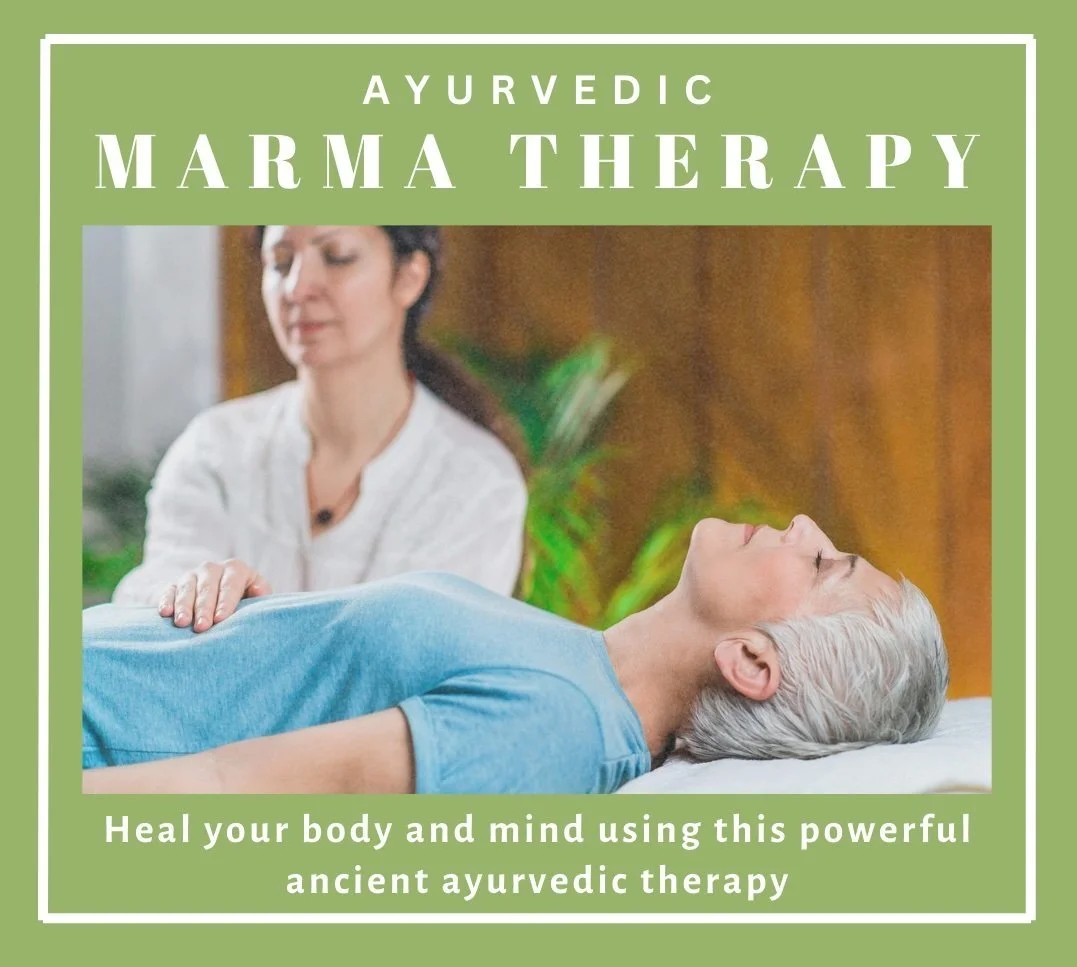
 Image 1 of 2
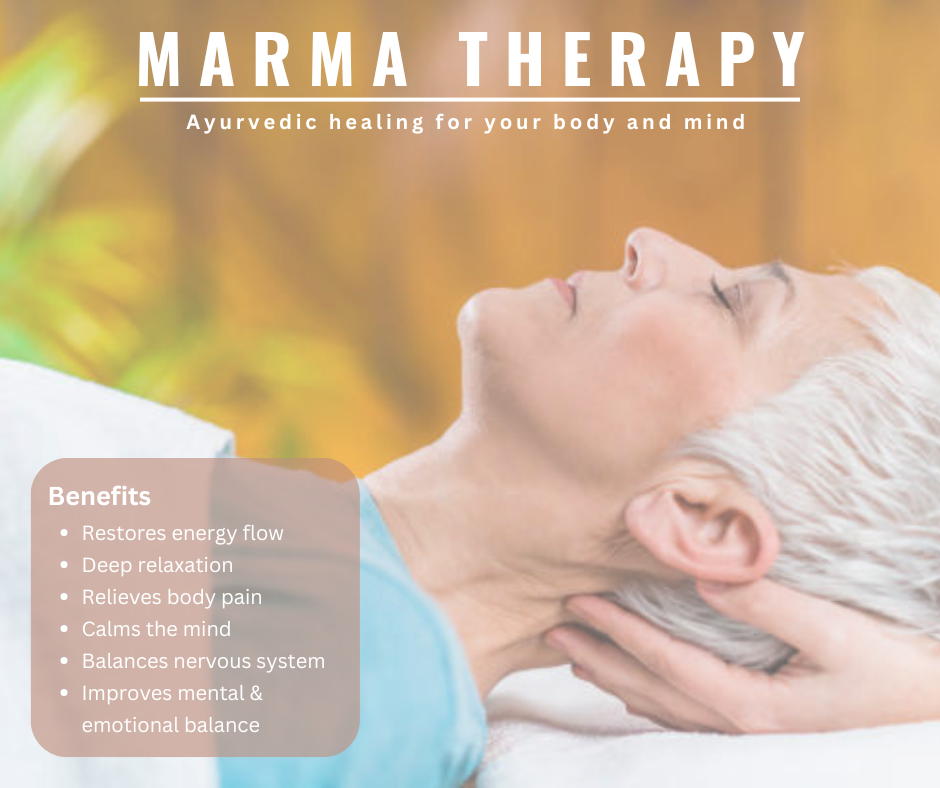 Image 2 of 2
Marma Therapy is a traditional healing practice rooted in Ayurveda, focusing on the stimulation of specific energy points (called "marmas") on the body. These points are considered gateways to physical, emotional, and spiritual well-being. Here are some common FAQs about Marma Therapy:
How Does Marma Therapy Work?
Marma Therapy works by stimulating these key energy points through touch, pressure, or massage. The technique is used to release blocked energy, relieve pain, enhance circulation, and promote healing. Marma Therapy also encourages emotional release, as it is believed that unresolved emotions can become trapped at specific points in the body.
What Are the Benefits of Marma Therapy?
Marma Therapy is said to offer a variety of benefits, including:
Pain relief: Helps alleviate chronic pain, muscle tension, and joint discomfort.
Stress reduction: Calms the nervous system and reduces stress and anxiety.
Improved circulation: Enhances blood and lymphatic flow, supporting detoxification.
Emotional healing: Helps release emotional blockages and promotes mental clarity.
Energy balancing: Promotes harmony between the body, mind, and spirit.
Boosted immunity: Strengthens the body’s natural defenses and vitality.
Is Marma Therapy Safe?
Marma Therapy is generally safe when performed by a trained and experienced practitioner. However, it’s important to inform your therapist about any existing health conditions, allergies, or sensitivities before the treatment. Since it involves applying pressure to specific points, it’s recommended that Marma Therapy be avoided during pregnancy, in cases of open wounds, or in certain medical conditions (e.g., severe inflammation or active infections).
How Long Does a Marma Therapy Session Last?
A typical Marma Therapy session lasts between an hour to 90 minutes, depending on the treatment's intensity and the number of marmas being targeted.
How Does Marma Therapy Compare to Acupuncture or Acupressure?
While both Marma Therapy and acupuncture/acupressure focus on stimulating key points in the body, the main difference lies in their cultural and philosophical origins. Marma Therapy is part of the Ayurvedic tradition and works with energy points that influence not only the physical body but also emotional and spiritual health. Acupuncture and acupressure, on the other hand, are rooted in Traditional Chinese Medicine and focus primarily on balancing the flow of Qi (life force energy) along meridians in the body. Both therapies are effective for healing but approach energy flow from different systems of thought.
How Often Should I Receive Marma Therapy?
The frequency of Marma Therapy depends on the individual’s needs and health goals. For general wellness, a monthly or bi-weekly session might be sufficient. However, for acute issues such as pain or emotional healing, more frequent sessions may be recommended initially. Your practitioner will assess your condition and suggest an appropriate schedule.
Can Marma Therapy Be Combined with Other Treatments?
Yes, Marma Therapy can be safely combined with other holistic treatments, such as massage therapy, yoga, and acupuncture, to enhance its benefits. However, it’s important to communicate with all healthcare providers to ensure that treatments are complementary and do not interfere with one another.